


An electrician with license is a state-authorized professional who installs, maintains, and repairs electrical and low-voltage systems to current code. Licensed electricians can legally pull permits, schedule inspections, and provide insured, warrantied work. For homeowners and businesses in the 937 Gallaher Rd area, hiring licensed pros prevents safety risks and compliance delays.
By Aayush Patel, CEO — Alpha9 Electric
Last updated: 2026-06-25
Quick Overview & Table of Contents
This guide explains how to hire and work with a licensed electrician, what “licensed” really means, and how to pass inspections the first time. You’ll see step-by-step processes, checklists, and examples from Alpha9 Electric’s Tennessee projects, tailored to homeowners, businesses, and industrial facilities near 937 Gallaher Rd.
Use this skimmable overview to jump to what you need now. We include actionable steps, clear definitions, and local, Tennessee-focused tips drawn from active projects by Alpha9 Electric’s licensed team.
- What a licensed electrician is and how the credential works
- Why licensing matters for safety, insurance, and inspection success
- Step-by-step flow: permits → rough-in → service → final inspection
- Service types: new construction, panel upgrades, rewiring, lighting, generators, CCTV/access
- Best practices to evaluate providers and proposals
- Tools, permits, and planning resources
- Case studies from Alpha9 Electric around the 937 Gallaher Rd area
- FAQ and key takeaways you can act on today
- What Is a Licensed Electrician?
- Why Licensing Matters in 2026
- How Licensed Work Progresses
- Types of Licensed Services We Handle
- Best Practices for Choosing a Pro
- Tools, Permits, and Resources
- Case Studies & Examples
- Frequently Asked Questions
- Key Takeaways
- Conclusion
- Related Articles
What Is a Licensed Electrician?
A licensed electrician is certified by the state to install and service electrical systems that meet current code. They carry insurance, can pull permits, supervise crews, and warranty work. The license signals validated training, field hours, and testing—critical for safe, compliant power in homes, businesses, and industrial facilities.
Here’s what “license” actually covers and why it matters for your project timeline and safety plan.
Core credential and scope
- Training + exams: State-vetted education and testing validate real-world competence.
- Permits + inspections: Only licensed contractors can pull permits and coordinate required inspections.
- Insurance + bonding: Protects you and the property during and after work.
- Codes + updates: Work aligns with the latest model codes and local amendments.
Where licensing applies in your life
- Residential: New construction wiring, panel upgrades, service replacements, EV-ready circuits, and lighting.
- Commercial: Retail fit-outs, office buildouts, emergency egress lighting, signage power, and CCTV/access control.
- Industrial: Motor control centers, PLC and automation, high-voltage equipment, and plant-wide maintenance.
At Alpha9 Electric, our licensed team supports the full stack—residential to industrial—so you get one accountable provider from design through maintenance.
Why Licensing Matters in 2026
Licensing protects safety, schedules, and insurance coverage. Licensed electricians follow code, pull permits, and pass inspections—reducing rework, downtime, and risk. For 937 Gallaher Rd projects, using a licensed contractor helps ensure warranties remain valid and that your system is future‑ready for upgrades like EV chargers and smart lighting.
The reality is simple: electricity demands precision. A small mistake at a service entrance, panel, or equipment termination can lead to nuisance trips, damaged gear, or hazards. Licensing is your first quality filter.
Top reasons to insist on licensing
- Safety first: Correct conductor sizing, overcurrent protection, and grounding prevent failures.
- Insurance + warranty alignment: Many policies expect permitted, inspected work done by licensed pros.
- Fewer delays: Permit-ready drawings and inspection scheduling keep projects on track.
- Future-proofing: Proper capacity planning supports additions like generators and security systems.
Licensed vs. unlicensed: side-by-side
| Factor | Licensed Electrician | Unlicensed Person |
|---|---|---|
| Permits | Can pull, manage, and close permits | Cannot legally pull permits |
| Insurance | Liability and workers’ comp in place | Often none; higher homeowner risk |
| Inspections | Coordinates and passes inspections | Work may fail or be red‑tagged |
| Warranty | Documented warranty support | No enforceable warranty |
| Scope | Residential, commercial, industrial | Limited or unauthorized work |
If you’re evaluating proposals now, use our rewiring planning checklist to avoid scope gaps and surprise change orders.
How Licensed Electrical Work Progresses
Every permitted job follows a clear arc: scope and load calculations, permit application, rough‑in, service setup, device trim, testing, and final inspection. Licensed electricians own this sequence, coordinate with inspectors, and document results so your system is safe, compliant, and ready to use.
Whether you’re upgrading a panel or fitting out a retail space, this flow keeps you on schedule and protects your investment.
Step-by-step flow you can expect
- Discovery + load review: Define circuits, equipment, and capacity; note special systems like CCTV or access control.
- Proposal + drawings: Provide a written scope, one‑line as needed, and timeline with inspection milestones.
- Permitting: Submit plans; align start dates with inspector availability.
- Rough‑in: Run conductors, set boxes, label home runs, verify bonding/grounding, and photograph concealed work.
- Service + panels: Install service equipment, main and sub‑panels, correct breaker types, and torque terminations.
- Device trim: Set fixtures, devices, controls, and label panels; stage for inspection.
- Testing + QA: Metering, GFCI/AFCI checks, polarity, insulation resistance as required by scope.
- Final inspection + closeout: Address any notes; deliver as‑builts, labels, and O&M documentation.
For a deeper run‑down on new builds, see our new construction wiring guide and this electrical construction overview.
Types of Licensed Services We Handle
Alpha9 Electric covers residential, commercial, and industrial work under one licensed, insured roof. From panel upgrades and whole‑home rewiring to retail fit‑outs, generators, CCTV, access control, MCCs, PLCs, and high‑voltage installations—we design, install, and maintain systems across Tennessee.
Because your property isn’t a template, we align scope to your exact goals and constraints.
Residential (homes and apartments)
- Panel upgrades & rewiring: Service changes, aluminum/copper transitions, and load balancing.
- Lighting installation: LED retrofits, smart lighting controls, kitchen/landscape lighting.
- Generator installation: Standby systems sized to essentials and code‑compliant transfer gear.
- Wiring upgrades & repairs: AFCI/GFCI protection, dedicated circuits, fault diagnosis.
- Surge protection: Whole‑home suppression at service entrance and sensitive subpanels.
Commercial (offices, retail, restaurants)
- Commercial wiring: Tenant improvements, panelboards, emergency egress and signage.
- Security integration: CCTV and access control with network cabling and remote monitoring setup.
- Lighting solutions: LED design for merchandising, occupancy sensors, daylight harvesting.
- Code compliance: Inspection‑ready installations for faster openings.
Industrial (manufacturing plants, developers)
- Industrial wiring & controls: Motor control centers, PLC and automation, and production line power.
- High‑voltage installations: Coordination with utilities, safe switching, grounding, and labeling.
- Preventive maintenance: IR scans, torque checks, cleaning, and documentation for uptime.
Explore our current service menu and coverage on services in Kingston, TN and the broader Tennessee service area.
Best Practices for Choosing an Electrician with License
Verify licensing, insurance, and scope clarity before work begins. Ask for recent inspection passes, request permit numbers once issued, and confirm warranty terms in writing. Compare proposals line‑by‑line—breakers, conductors, device counts, labeling—so you’re evaluating the same deliverables across providers.
Strong process beats guesswork. Here’s a practical buyer’s checklist used by our commercial and residential clients.
Buyer’s checklist (simple, effective)
- License & insurance: Capture license numbers and certificates of insurance.
- References: Ask for 2–3 recent projects similar in size and type.
- Inspection history: Request examples of first‑pass approvals.
- Detailed scope: One‑line, panel schedules, fixture/ device counts, cable types, and labeling approach.
- Timeline + milestones: Include inspection dates and utility coordination windows.
- Warranty + closeout: What’s covered, documentation delivered, and response times.
Common red flags to avoid
- “No permit needed” for permanent wiring changes or new circuits.
- Vague materials (“misc. wire,” “standard breakers”) with no make/model.
- Reluctance to share license/COI, or no recent inspection references.
- No labeling plan for panels, devices, and cabling.
For a broader context on working with licensed pros locally, these short explainers on licensed electricians in Kingston and a residential electrician guide provide additional perspective.
Tools, Permits, and Resources
Licensed electricians combine calibrated tools with documented procedures and permits. Expect torque‑verified terminations, labeled conductors, load calculations, and inspection scheduling. For homeowners and facility managers, saving serial numbers, photos, and panel schedules streamlines maintenance and future upgrades.
Tools, paperwork, and coordination work together—here’s how we organize them for predictable results.
Field tools and test instruments
- Torque screwdrivers/wrenches: Confirm manufacturer‑specified terminations.
- Multimeters and clamp meters: Verify voltage, continuity, load, and imbalances.
- Insulation testers: Confirm conductor health in sensitive environments.
- Labeling systems: Panel, circuit, and device IDs for maintenance clarity.
Permits and documentation
- Permit application: Scope, drawings, and schedule alignment with inspections.
- As‑builts + photos: Visual record of concealed work for future service.
- Closeout package: Panel schedules, device lists, serial numbers, and O&M.
Need a refresher on residential service elements and inspections? Scan this concise explainer on residential electrical services near you for context and planning tips.
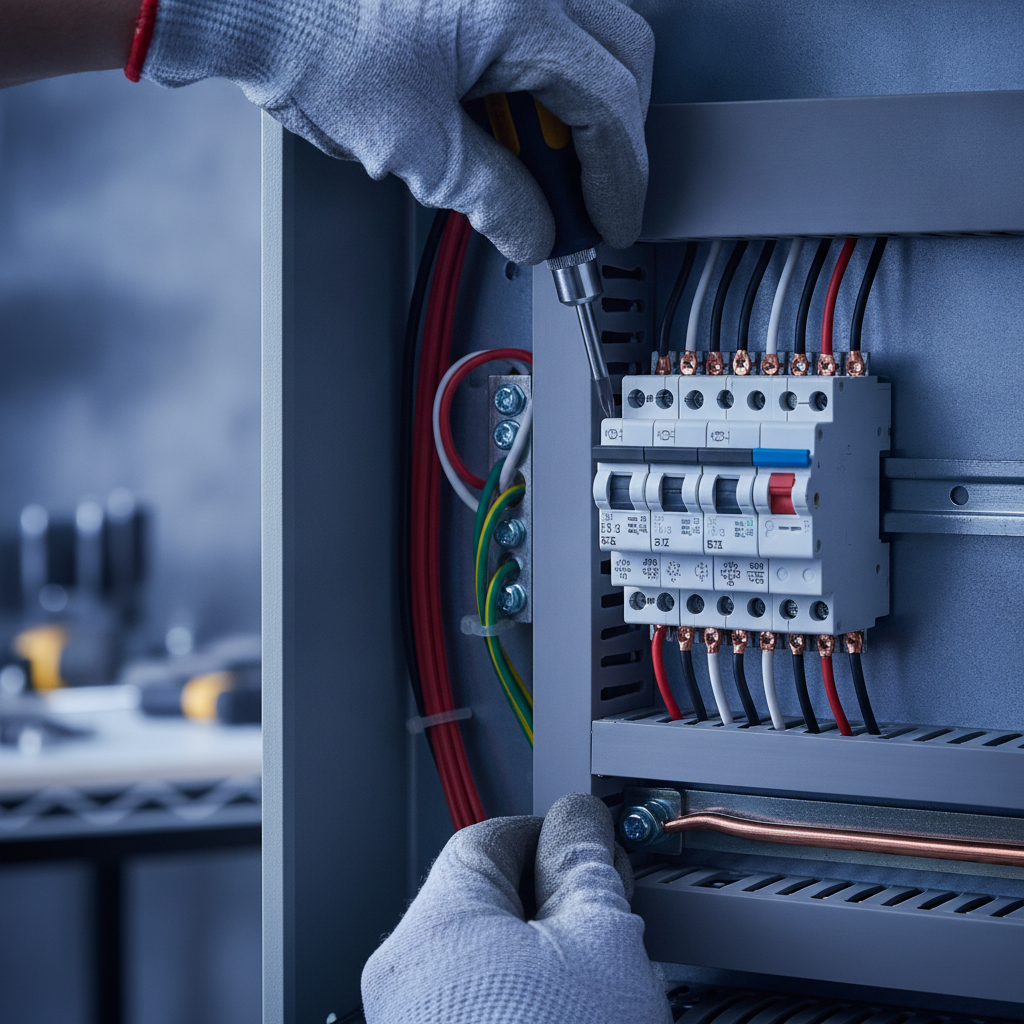
Case Studies & Examples
These short examples show how licensed electrical work reduces risk and speeds approvals. From a home panel upgrade to a retail CCTV fit‑out and an industrial MCC cleanup, each scenario highlights process discipline, documentation, and first‑pass inspection success.
We’ve selected recent scenarios near the 937 Gallaher Rd area to illustrate how a licensed, insured approach pays off day one and years later.
Example 1: Residential panel upgrade with generator‑ready plan
- Situation: Aging panel, limited capacity, frequent nuisance trips.
- Licensed approach: Load calculation, service upgrade, AFCI/GFCI where required, whole‑home surge, labeled circuits, generator transfer interlock provisioned.
- Outcome: First‑pass inspection, documented panel schedule, ready for future standby generator install.
Example 2: Retail security retrofit with CCTV and access control
- Situation: New tenant needed video coverage and controlled entry tied to existing power.
- Licensed approach: Low‑voltage design, PoE cabling plan, dedicated circuits for NVR and switches, neat cable management.
- Outcome: Clean inspection notes, reliable video uptime, and simplified remote monitoring.
Example 3: Industrial MCC cleanup and preventive checks
- Situation: Periodic breaker trips and warm lugs in a production area.
- Licensed approach: Torque verification, IR scan, conductor re‑termination per manufacturer specs, labeling edits.
- Outcome: Stabilized operation and a clear maintenance log for the plant team.
Local considerations for 937 Gallaher Rd
- Plan around seasonal thunderstorms; standby generator readiness and surge protection reduce outages and equipment resets.
- Build inspection windows into schedules; align rough‑in and final visits to prevent multi‑day delays.
- Coordinate low‑voltage (CCTV/access) with electrical scope so device power and data drops land exactly where needed.

Get Expert Help from a Licensed Team
Need a licensed electrician now? Alpha9 Electric handles residential, commercial, and industrial projects across Tennessee with 24/7 response, permits, and inspection support. Share your scope, and our team will align design, scheduling, and documentation for a smooth, code‑compliant finish.
Explore our full service list for Kingston or confirm coverage on our Tennessee service areas page. We’re licensed, bonded, insured, and backed by a quality warranty.
Frequently Asked Questions
These quick answers cover the most common questions about hiring a licensed electrician: what “licensed” includes, when permits apply, how inspections work, and how residential, commercial, and industrial scopes differ in practice.
What does an electrician with license actually do?
They design, install, maintain, and repair electrical and low‑voltage systems to current code. Licensed electricians can pull permits, schedule inspections, supervise crews, and provide insured, warrantied work across residential, commercial, and industrial settings.
When is a permit required for electrical work?
Permits typically apply to new circuits, service or panel changes, fixed equipment wiring, and new construction. Minor like‑for‑like device swaps may be exempt. Your licensed contractor will advise and handle the permit and inspection process.
How do I confirm a contractor is truly licensed and insured?
Request license numbers and certificates of insurance before signing. Ask for 2–3 recent similar projects and examples of first‑pass inspections. A reputable contractor will share documentation promptly and explain coverage in plain language.
Can one licensed team handle CCTV and access control, too?
Yes. Alpha9 Electric integrates electrical and low‑voltage work, including CCTV, access control, network cabling, and remote monitoring setup. Combining scopes reduces coordination gaps and speeds approvals.
Key Takeaways
Hiring an electrician with license safeguards safety, schedules, and warranties. Demand permits, documented scope, and inspection milestones. Choose a provider that can manage electrical and low‑voltage together to reduce handoffs and delays—especially useful for homes, retail, and industrial sites near 937 Gallaher Rd.
- Licensing is your first quality control for code compliance and safety.
- Documented scope, labeling, and torque checks prevent rework.
- Inspection coordination and as‑builts speed closeout and future changes.
- Integrated security and electrical scopes cut downtime and confusion.
Conclusion
An electrician with license delivers code‑compliant, insured, and inspection‑ready work. Whether you need a panel upgrade, lighting, generator readiness, or a CCTV/access retrofit, a licensed team protects your property today and prepares it for tomorrow’s demands.
Alpha9 Electric supports residential, commercial, and industrial clients across Tennessee. If you’re planning work near the 937 Gallaher Rd area, our licensed team can scope, permit, and deliver a clean, warrantied finish.
Related Articles
If you’re evaluating upgrades or planning new work, these topics pair well with hiring a licensed electrician. They help you plan scope, anticipate inspections, and coordinate electrical with low‑voltage systems for smoother projects.
- New construction wiring: phasing, rough‑in, and service setup
- Panel upgrades and whole‑home rewiring
- Commercial fit‑outs: lighting, signage, and emergency egress
- CCTV and access control integration
- Industrial motor controls, MCCs, and PLC/automation


