


Choosing commercial security camera systems requires more than picking a brand or resolution. Facility managers and business owners must weigh evidence quality, ongoing costs, network impact, and installer capacity. This comparison uses the decision criteria buyers actually use, then evaluates wired PoE and ePOE with NVR or VMS, cloud-managed systems, and hybrid patterns so you can match an architecture to retail, warehouse, office, or multi-site needs.
What decision criteria matter for commercial security camera systems
Before comparing architectures, rank the criteria that determine whether a system meets your goals. Industry buyer guides and technical overviews consolidate these into a short checklist you can use during vendor conversations. Key items include:
- Resolution and sensor quality - camera sensor and lens quality matter more than a headline megapixel number when you need to read plates or identify faces.
- Analytics and AI - object detection, people counting, and tuned motion filters reduce false alerts and speed searches.
- Power source - PoE, ePOE, or local power choices affect installation simplicity and run length limits.
- Connectivity and bandwidth - whether cameras stream to an on-site recorder or to the cloud changes network design and monthly costs.
- Storage model and retention - local NVR, on-prem VMS, cloud retention, or hybrid storage drive costs and evidence availability.
- Environmental rating and hardware durability - IP ratings, vandal resistance, and suitable housings determine outdoor longevity.
- Warranty, support, and total cost of ownership - contract terms and long-term subscription fees are often a larger lifetime cost than upfront hardware.
Authoritative buyer guides consistently list these decision factors and emphasize that sensor and lens quality drive evidence usefulness more than raw resolution alone.
Wired PoE and ePOE with NVR or on-site VMS: strengths and limitations
When wired PoE or ePOE is the right choice
Wired PoE and ePOE systems paired with an NVR or an on-site VMS excel where reliability, predictable bandwidth, and long-term retention are priorities. Sites that demand consistent uptime, high frame rate recording, and minimal dependence on internet connectivity typically choose PoE. Wired architectures are also the standard when you plan many cameras on a single switch fabric because power and data travel over one cable.
Strengths
- High reliability and local recording even if internet is lost.
- Better control over bitrate, codecs, and retention for evidence quality.
- Scalable for large camera counts when paired with appropriate PoE switches and a VMS.
- Lower recurring fees because long-term retention can be managed on-site.
Limitations
- Higher upfront infrastructure work for wiring, switches, and recorders.
- On-site hardware requires backup and maintenance policies.
- Large deployments that need advanced analytics or central management may require a VMS and server resources rather than a simple NVR.
For many buyers wired PoE is preferred in commercial settings because it offers predictable performance and easier scaling compared with consumer wireless approaches. Industry overviews note that facilities beyond basic camera counts often move toward an on-prem VMS instead of stand-alone NVRs to manage zones and analytics at scale.
Cloud-managed systems: strengths and limitations
When cloud-managed systems make sense
Cloud-managed cameras are attractive where rapid deployment, remote monitoring, and simple central management matter. Small chains, offices with limited IT staff, and sites that want automatic software updates and an app-focused user experience often favor cloud-first systems. The operational simplicity can save time and reduce the need for local recorder hardware.
Strengths
- Remote configuration, centralized alerts, and easy mobile viewing without an on-site recorder.
- Automatic software updates and cloud-hosted analytics reduce local IT overhead.
- Lower initial hardware complexity when you accept subscription storage.
Limitations
- Recurring subscription costs for storage and advanced analytics.
- Higher continuous bandwidth use and potential sensitivity to internet outages.
- Retention and evidence export can be more expensive or limited depending on the cloud plan.
Cloud-first solutions fit many modern retail and office deployments, but they also introduce recurring costs and require network capacity planning. If you are comparing cloud systems, read the vendor’s storage and export terms carefully and consider an on-site backup strategy for long-term evidence. For a practical discussion of retention and network planning, see our article on cloud based security camera systems for business.
Hybrid deployments: when mixed architectures make sense
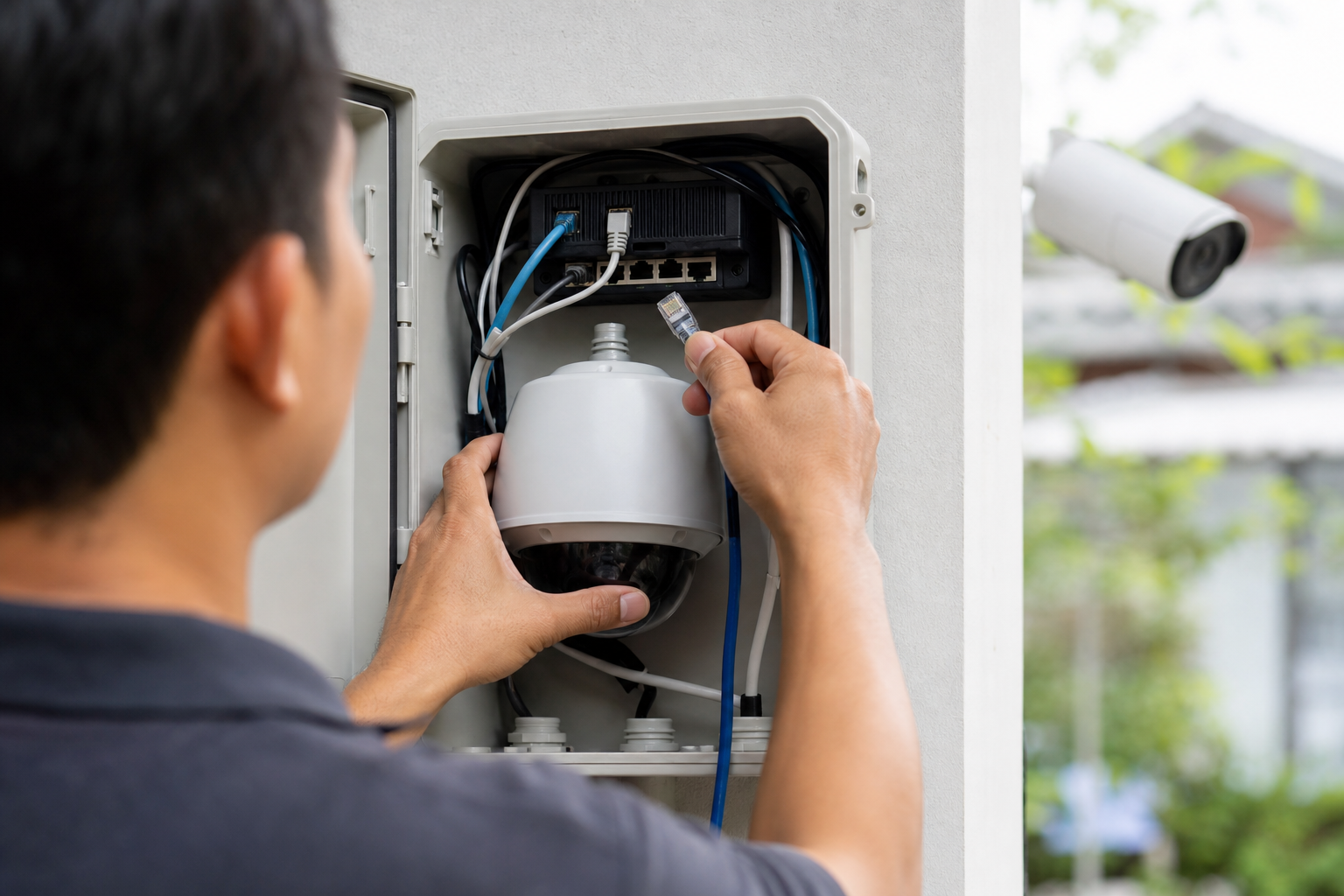
Hybrid designs combine local recording for high-priority cameras with cloud-managed endpoints for convenience and remote sites. Typical hybrid patterns place a local NVR or VMS on critical entrances and parking areas where license plate capture or long-term retention is essential. Secondary cameras stream to a cloud service for easy centralized monitoring across sites.
Hybrids balance cost, evidence preservation, and remote access. Use these rules of thumb:
- Local recorders for evidence-critical fields such as back dock bays, parking lots, and high-risk points of sale.
- Cloud-managed cameras for lobby views, small branch offices, and remote sites that need central oversight with minimal local infrastructure.
- Ensure consistent time sync and data export options so evidence from both layers is admissible and quickly retrievable.
How storage, retention, and evidence quality affect your choice
Hardware choices such as sensor quality, lens, codec, and frame rate directly affect whether you can read a license plate at 50 feet or identify a face under mixed lighting. Storage models determine how long you keep that evidence and how fast you can search it. Industry guidance warns that the system you buy today shapes whether you can prove an incident months from now.
Plan retention by starting with three inputs: the number of cameras, the target resolution and frame rate, and the retention period in days. Use conservative estimates for bitrate and include overhead for analytics metadata. For sites that must keep video for months, on-site storage or hybrid backup often reduces long-term costs compared with pure cloud plans that bill storage monthly.
Installation, power, and cabling: PoE, ePOE, junction boxes, and electrician coordination
Installation planning is the point where estimates turn into costs. Key infrastructure considerations include PoE budget and switch choice, ePOE for runs beyond 328 feet, suitable outdoor junction boxes for weather and tamper protection, and professional wire concealment and conduit where required. Trenching, conduit work, and power coordination often push buyers to hire a licensed low voltage electrician or an electrical contractor who understands camera systems.
- Budget PoE supply by summing peak camera power draws with 20 percent headroom on switches.
- Choose ePOE when you need reliable long runs without intermediate power injectors.
- Use outdoor junction boxes and rated camera housings to protect connectors and to facilitate neat wire concealment.
- Coordinate with a licensed electrician for conduit, building code compliance, and any service panel work.
Alpha9 Solutions combines licensed electricians and security system installers, which can reduce coordination friction and ensure that wiring, junction boxes, and power work are scoped and executed together.
Which option fits which business
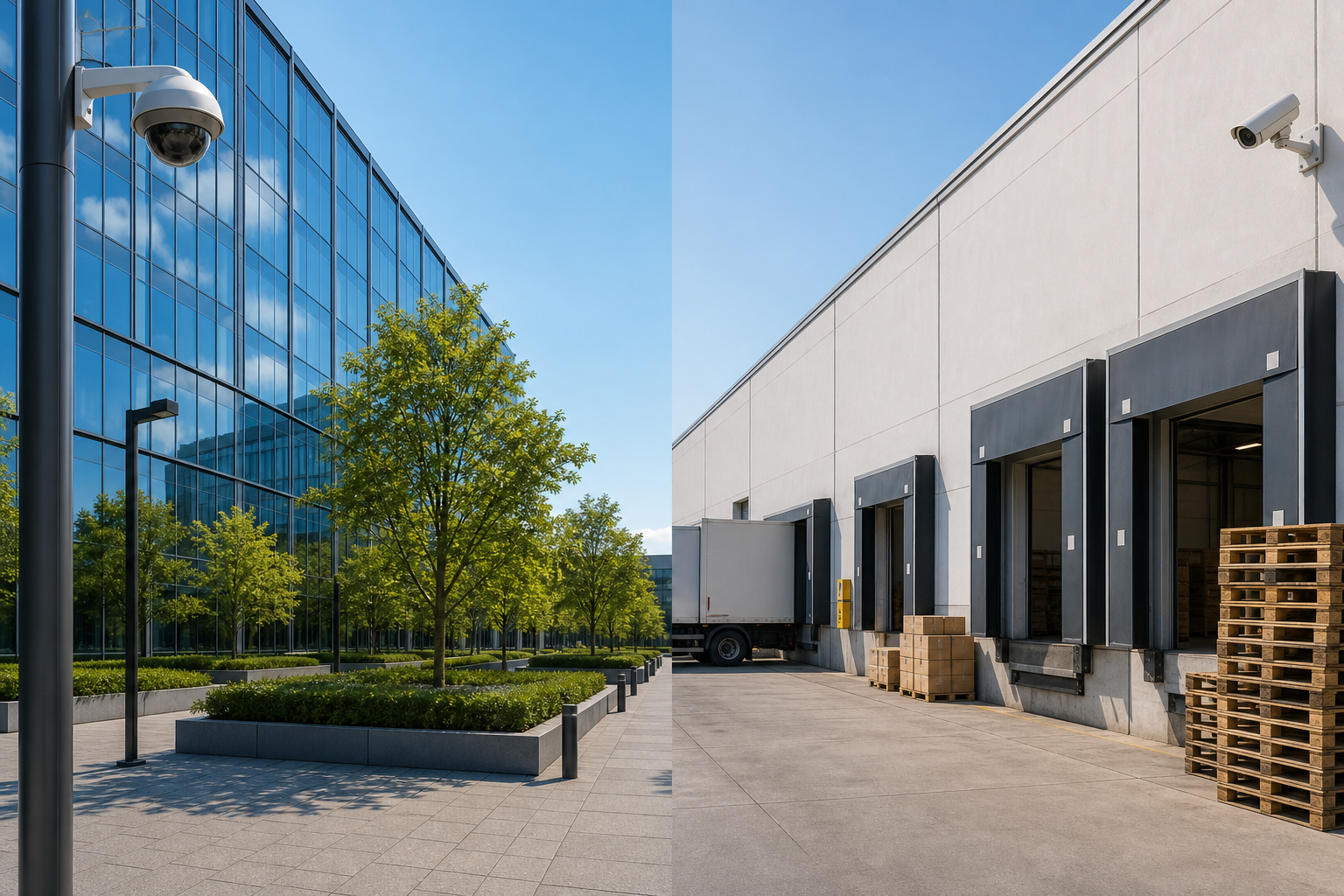
- Retail - Hybrid or PoE with analytics at checkout and entrances. Use PoE for high-evidence points and cloud for store-level monitoring.
- Warehouse - PoE with higher resolution cameras and local retention for long-term evidence. Wide area coverage and license plate capture favor on-site storage.
- Small office or single site - Cloud-managed systems can be cost effective when you value low maintenance and simple remote access.
- Multi-site chains - Centralized cloud management or a VMS that aggregates on-site recorders depending on scale. Chains often prefer cloud for operational consistency, but large camera counts push toward VMS clusters.
Facilities with many cameras, multiple building zones, or specialized analytics requirements frequently choose a VMS running on-site servers rather than a basic NVR. When you approach the scale at which centralized analytics and advanced search are required, plan for server resources and a maintenance schedule.
Questions to ask installers and a checklist for a free on-site estimate
Bring this checklist to every installer meeting to get apples-to-apples quotes and an actionable scope.
- What evidence goals should we meet for face identification or license plate reads?
- What retention period do you recommend and how will storage be sized?
- Will cameras be PoE, ePOE, or local power, and what switches or injectors are required?
- How will you handle outdoor junction boxes and wire concealment?
- What warranty, monitoring, and support SLAs are included or optional?
- Who owns the recorded data and what are the cloud subscription terms if applicable?
Alpha9 Solutions offers free on-site estimates and can answer each of these items while showing compatible 4K IP cameras, ePOE models, NVR options, and installation accessories such as junction boxes and concealment methods. Ready to get a site-specific plan and a free estimate? Contact Alpha9 Solutions to schedule your on-site assessment and coordinated electrician and installer quote.
Frequently asked questions
How do I decide between PoE NVR, on-prem VMS, and cloud-managed systems for evidence quality
Choose PoE with an NVR or on-prem VMS when evidence quality, long retention, and local control matter. Use cloud-managed systems where remote access and low maintenance are priorities. For very large deployments or advanced analytics pick a VMS server cluster. Buyer guides emphasize that hardware and storage choices determine whether you can identify faces or read license plates months later.
Will cloud-managed cameras work on my existing network and how much bandwidth do they use
Cloud cameras can work on existing networks but you must plan upstream bandwidth. Bandwidth depends on resolution, frame rate, and whether recording is continuous or event driven. Test a sample camera stream to estimate aggregated bandwidth and plan for bursts. For multi-camera sites consider segregating camera traffic on its own VLAN and sizing internet uplink accordingly.
When should I choose ePOE instead of standard PoE for a commercial site
Choose ePOE when camera runs exceed standard PoE distance limits or when you need more robust power delivery over long runs without intermediate power. ePOE can reduce the need for additional power infrastructure and simplify long-span installations.
How many days of video storage should I plan for and what affects retention costs
Retention depends on incident risk, legal or insurance requirements, and your search needs. Typical ranges are 14 to 90 days for many businesses, and longer for high risk sites. Retention costs rise with resolution, frame rate, number of cameras, and whether storage is cloud billed monthly or maintained on-site.
What specific questions should I ask when getting a free on-site estimate
Ask about evidence goals, recommended retention, PoE capacity, ePOE needs, outdoor junction boxes and concealment, warranty terms, support SLAs, and data ownership. Request a written scope that lists camera positions, cable routes, switch and recorder models, and any trenching or conduit work required.


