


Last updated: October 2026
By Aayush Patel - CEO, Alpha9 Solutions
Last updated: 2026-10-27
What this guide covers
Residential electrical companies help homeowners keep power safe, reliable, and suitable for modern loads. Their work may include troubleshooting a dead outlet, correcting unsafe wiring, upgrading a service panel, adding lighting, installing an EV charger, or preparing power and data routes for home security cameras.
This guide explains how to compare contractors, what a professional visit should include, when Tennessee licensing and permits matter, and how electrical work can be coordinated with low-voltage security systems. It is written for homeowners in Kingston and across the wider service area, including Nashville, Knoxville, Chattanooga, Atlanta, Charlotte, Lexington, and Charleston.
- What residential electrical companies do and when to call one
- How licensing, permits, inspections, and documentation fit together
- Which projects require planning, testing, and professional installation
- How electrical work can support lighting, networking, and cameras
- Questions to ask before approving a residential electrical project
What is a residential electrical company?
A residential electrical company is a contractor that designs, installs, repairs, and maintains electrical systems in homes. Typical work includes service panels, branch circuits, receptacles, switches, lighting, grounding and bonding, GFCI and AFCI protection, surge protection, and dedicated circuits for appliances or EV charging.
The company may also coordinate related low-voltage work, such as structured cabling, network equipment, doorbell wiring, and IP security systems with cameras and NVRs. Electrical and low-voltage systems are different scopes, so a good contractor explains which team performs each task and how the work will be sequenced.
For a homeowner, the important distinction is not simply whether a company can replace a device. It is whether the provider can assess the existing system, identify hazards, select correctly rated equipment, obtain required approvals, and leave the installation understandable for the next person who services it.
Why professional residential electrical work matters
Electrical problems are not always visible. A warm receptacle, flickering light, repeated breaker trip, burning odor, buzzing panel, or unexplained shock can indicate a loose connection, overloaded circuit, damaged device, moisture issue, or other hazard. Turning a breaker back on repeatedly does not diagnose the cause.
Professional testing can reveal reversed polarity, missing or improper grounding, poor terminations, voltage abnormalities, and protection devices that are not operating as expected. A contractor can then recommend an appropriate repair instead of replacing parts by trial and error.
Situations that deserve prompt attention
- A breaker or fuse trips repeatedly after the load is removed.
- An outlet, switch, cord, or panel area feels hot or smells burnt.
- Lights flicker when appliances start or several devices run together.
- Water has reached an outlet, junction box, panel, or exterior connection.
- You find damaged insulation, amateur splices, missing covers, or exposed conductors.
- You need a new circuit, panel alteration, EV charger, or concealed wiring route.
Switch off power when it is safe to do so and call a qualified professional when a condition is active or uncertain. Do not open a service panel or investigate energized equipment without the training and equipment required for the task.
Tennessee licensing, permits, and inspections
Licensing requirements depend on the work, project value, and jurisdiction. The Tennessee Department of Commerce and Insurance explains that electrical work is licensed at state and local levels, and that the need for a state Limited Licensed Electrician, or LLE, license depends in part on the total project cost and location. Homeowners should also check with the city or county codes office about permits and inspections.
For broader electrical contracting, Tennessee classifications include CE categories. The state classification outline identifies CE-B for electrical work on buildings and structures and CE-D for certain low-voltage signal, burglar alarm, fire detection, and security work up to 70 volts. The correct classification should match the contracted scope rather than being assumed from a company’s general description.
A contractor license is generally required before contracting, bidding, offering, or negotiating on qualifying projects of $25,000 or more. That threshold does not answer every permit question, so verify the current local requirements before work begins. The Tennessee Board for Licensing Contractors and the state’s electrical licensing guidance are useful starting points.
For qualifying smaller projects, a Limited Licensed Electrician may be relevant. Tennessee also permits a homeowner to obtain a permit for work on their own residential dwelling, but that option does not remove the need to follow applicable codes or local procedures. The state’s Limited Licensed Electrician information should be checked for current requirements.
Questions to ask about approvals
- Does this project require a permit in my city or county?
- Which license or classification applies to the electrical scope?
- Who will pull the permit and schedule the inspection?
- What documentation will I receive after testing and completion?
How residential electrical companies work
A reliable project follows a defined process rather than beginning with an unexplained parts list. The exact sequence varies by job, but the following stages help a homeowner understand what should happen.
1. Discovery and site assessment
The contractor asks what is happening, when it started, what loads are involved, and whether there has been water, remodeling, or previous electrical work. At the property, the technician reviews the panel, affected devices, access routes, and the condition of visible wiring.
2. Scope and safety plan
The written scope should identify circuits, devices, equipment, finishes, access requirements, outage windows, and exclusions. If the work involves a panel, EV charger, large appliance, or several new circuits, the contractor should explain capacity and load considerations instead of promising a connection without evaluation.
3. Permit and scheduling review
When approval is required, the contractor explains who handles the permit and inspection. Scheduling should account for power interruptions, occupied rooms, pets, attic or crawlspace access, and coordination with other trades.
4. Installation and protection
Work should use correctly rated materials, protected cable routes, suitable boxes and covers, and neat terminations. Exterior installations need weather-appropriate enclosures and sealed penetrations. Low-voltage cable should be routed and separated appropriately from line-voltage conductors.
5. Testing and handover
Before completion, the contractor should verify the relevant devices and circuits, restore covers, label changes, clean the work area, and explain what was done. Useful handover materials may include photographs, a revised panel schedule, test results where applicable, product information, and maintenance instructions.
Projects residential electricians handle
Panels, circuits, and power quality
Panel assessments can identify labeling problems, capacity concerns, damaged components, corrosion, heat, and incompatible modifications. A panel upgrade is not automatically the answer to every tripping problem; the contractor should first determine whether the cause is a faulty device, overloaded branch circuit, damaged wiring, or an actual service-capacity issue.
New circuits may support kitchens, workshops, home offices, HVAC equipment, laundry appliances, or dedicated networking equipment. Correct conductor sizing, breaker selection, routing, and labeling matter more than simply adding outlets.
Lighting and controls
Lighting projects can combine ambient, task, accent, exterior, and security lighting. Dimmers, timers, and motion controls should be selected for compatibility with the fixtures and intended use. Exterior fixtures need suitable ratings and mounting, especially where wind, rain, or seasonal storms may affect connections.
Homeowners considering LEDs can review Alpha9 Solutions’ LED lighting upgrade guidance while discussing fixture compatibility and control options with the installer.
EV charging
A Level 2 EV charger commonly requires a dedicated circuit and careful review of panel capacity, conductor sizing, breaker requirements, equipment location, and cable protection. The installation should be planned around the actual charger specifications and local approval process, not a generic outlet assumption.
GFCI, AFCI, and surge protection
GFCI protection helps reduce shock risk from ground faults, particularly in locations where electricity and water may meet. AFCI protection is intended to detect dangerous arc-fault signatures on circuits where it is required. The applicable requirements depend on the home, circuit, equipment, and adopted code, so a professional should assess the installation rather than applying a one-size-fits-all rule.
Whole-home surge protection can complement point-of-use protection for sensitive electronics. It is one part of a broader plan that includes sound wiring, correct grounding and bonding, and appropriate equipment installation.
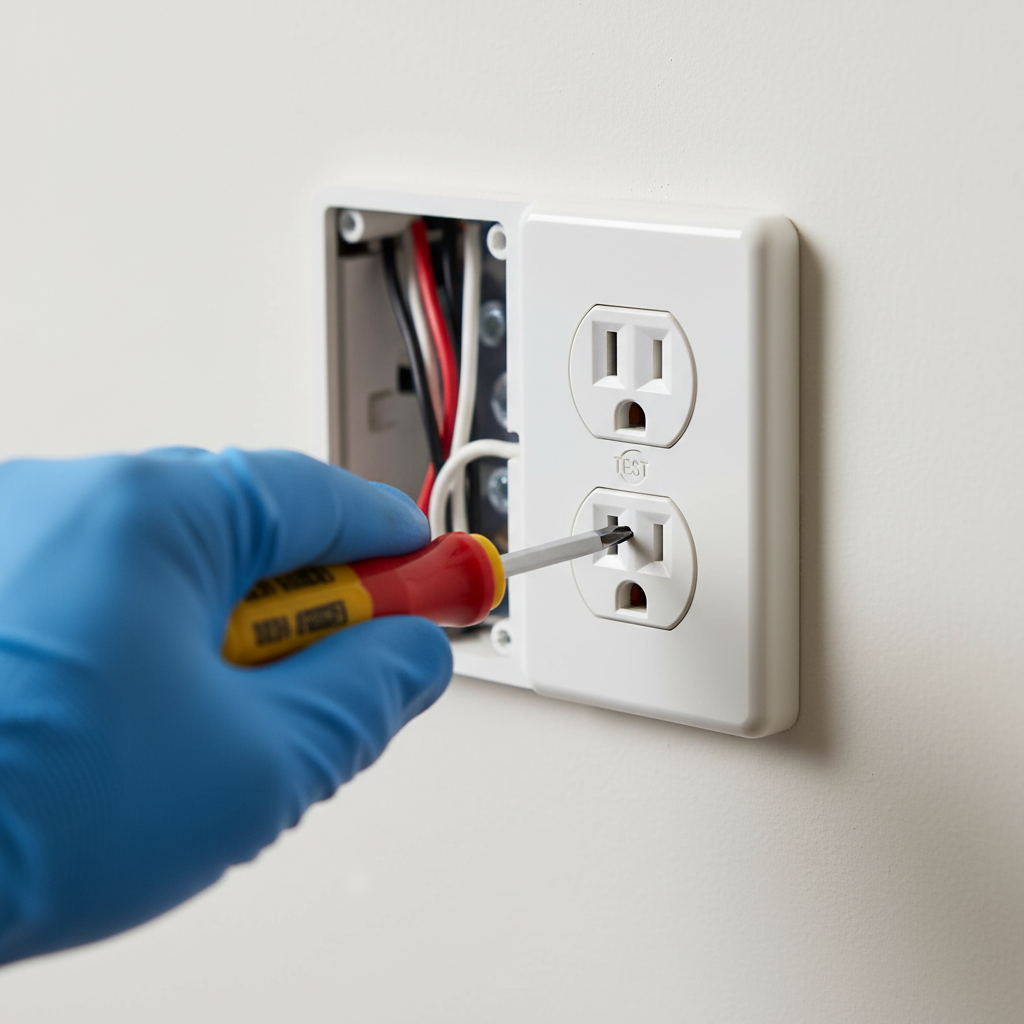
How electrical work supports home security cameras
Home security cameras need more than a mounting location. A dependable installation considers power, data paths, weather exposure, network equipment, recording hardware, service access, lighting, and the viewing angle. Planning those details during electrical or remodeling work can avoid visible surface cable and repeated wall access.
Wired IP cameras may use Power over Ethernet from suitable network equipment or an NVR, while the electrical scope may provide a nearby receptacle or dedicated circuit for the network and recording equipment. The two teams should agree on cable routes, penetrations, mounting surfaces, and equipment locations before walls or ceilings are closed.
- Coverage: Place cameras to see approaches, doors, driveways, and other priority areas without aiming into avoidable glare.
- Lighting: Motion lighting can improve identification after dark, but fixtures should not wash out the camera image.
- Weather protection: Use appropriate exterior boxes, seals, and cable entry methods.
- Serviceability: Leave practical access to the NVR, network equipment, power supplies, and junction points.
- Network planning: Confirm cable category, route length, PoE requirements, and available network capacity.
Alpha9 Solutions also explains the practical differences between wired and wireless security cameras. A wired design can be especially useful when a home is already open for electrical work or when stable recording is a priority.
Best practices for homeowners
Before the visit
- Write down every symptom, including when it occurs and which devices are affected.
- Photograph the panel label and affected outlets without removing covers.
- List planned loads such as an EV charger, range, workshop equipment, office, or cameras.
- Identify attic, crawlspace, finished-wall, exterior, and access constraints.
- Ask whether occupants, pets, water shutoffs, or scheduled outages affect the work.
During the project
- Confirm the scope and any change orders before additional work proceeds.
- Keep the work area clear and do not interfere with testing or lockout procedures.
- Ask where new circuits terminate and how the panel will be labeled.
- Confirm the plan for wall openings, exterior penetrations, patching, and cleanup.
After completion
- Receive the final invoice, permit information when applicable, and equipment documents.
- Test user-accessible GFCI devices according to the manufacturer’s instructions.
- Keep photographs and the updated panel schedule with household records.
- Ask what symptoms require a callback and who handles future service.
For larger or safety-sensitive work, homeowners can also review Alpha9 Solutions’ explanation of why disciplined switchgear testing matters. The equipment and standards differ between industrial and residential settings, but the principle of verification remains useful.
What affects residential electrical project cost?
There is no responsible single price for “residential electrical work” without knowing the scope. A device replacement, a concealed new circuit, a service upgrade, and an EV charger can involve very different labor, materials, approvals, and testing.
Major cost drivers
- Scope: Number of circuits, devices, fixtures, cameras, or pieces of equipment.
- Access: Finished walls, masonry, attic routes, crawlspaces, height, and furniture.
- Distance: Longer wire, conduit, data, and equipment runs require more material and labor.
- Existing conditions: Damaged wiring, crowded panels, missing grounds, or prior unpermitted work.
- Approvals: Permit, inspection, engineering, or utility coordination where applicable.
- Finish and documentation: Patching, concealment, labeling, testing, photos, and handover records.
Ask for a written scope that separates included work from allowances and exclusions. A useful estimate explains assumptions, access requirements, equipment responsibility, scheduling, and what happens if concealed conditions differ from what was visible.
DIY versus hiring a professional
Some homeowners may be comfortable with basic maintenance tasks, but electrical risk increases quickly when wiring, panels, concealed routes, wet locations, or high loads are involved. Never work on energized equipment, and do not assume that turning off a nearby switch has disconnected the circuit.
| Task | Professional assessment | Why the boundary matters |
|---|---|---|
| Replacing a like-for-like cover or trim | May be suitable for a careful homeowner | Stop if the box, device, wiring, or grounding is damaged or unfamiliar. |
| Replacing a receptacle or switch | Use a professional when uncertain | GFCI, AFCI, multi-wire circuits, aluminum wiring, and grounding require care. |
| New circuit or subpanel | Hire a licensed electrical professional | Requires design, conductor sizing, protection, labeling, and possible permits. |
| Panel alteration or service work | Hire a licensed electrical professional | Service equipment presents serious shock and arc-flash hazards. |
| Level 2 EV charger | Hire a qualified installer | Capacity, dedicated protection, routing, and local approval must be evaluated. |
| Exterior camera or lighting power | Use a professional when wiring is new or concealed | Weather sealing, cable protection, and safe separation affect reliability. |
How to choose among residential electrical companies
Start with licensing and insurance, then evaluate how clearly the company explains the work. A contractor should be able to describe the diagnostic method, expected outage, permit responsibility, testing, cleanup, and documentation without relying on vague assurances.
Hiring checklist
- Verify the license, classification, insurance, and business identity appropriate to the project.
- Ask for a written scope and a clear process for changes or concealed conditions.
- Confirm who handles permits, inspections, utility coordination, and final documentation.
- Ask how the company labels circuits and verifies GFCI, AFCI, grounding, or other relevant work.
- Request examples of similar residential projects rather than unrelated commercial work.
- Clarify warranty, callback, cleanup, scheduling, and communication expectations.
- If cameras are included, confirm the division between electrical, network, mounting, and recording work.
Local availability should be independently checked rather than inferred from a directory listing. For comparison, the Kingston electrician directory may identify providers, but homeowners should still verify current residential service, licensing, insurance, and project fit directly.
Local considerations for Kingston and surrounding service areas
Homes in Kingston and Roane County may combine older wiring, remodeled rooms, detached structures, and newer loads such as EV charging or network equipment. In Nashville, Knoxville, Chattanooga, and other Tennessee communities, the permitting authority and adopted requirements may differ, so the project address matters.
Storm exposure and seasonal humidity also make exterior details important. Weather-rated boxes, protected cable routes, sealed penetrations, and accessible service points help lighting and camera installations remain maintainable. Discuss detached garages, long driveway runs, gates, and outbuildings during the initial assessment rather than adding them after the estimate.
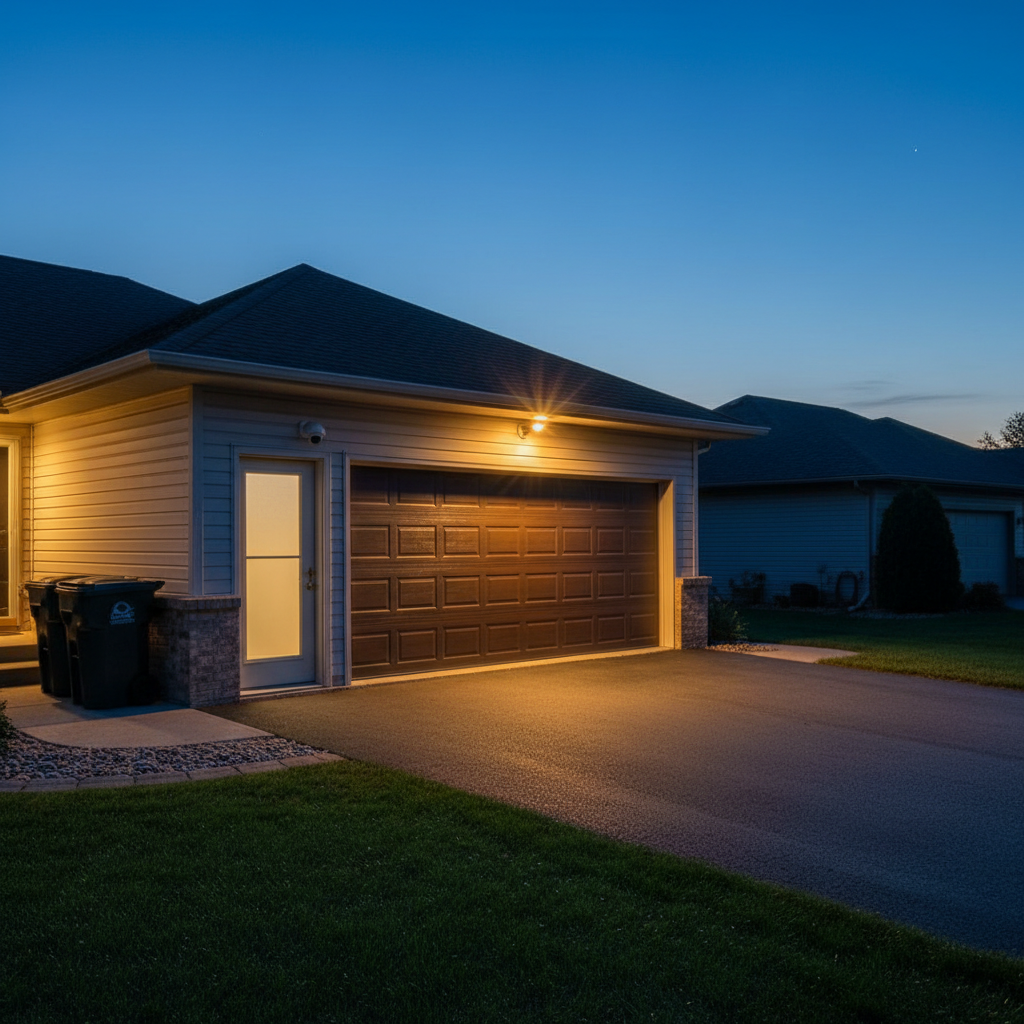
Planning electrical and security work together
If a remodeling project includes lighting, outlets, networking, or cameras, combine the planning stages even when different teams perform the installations. Mark camera views, NVR location, network equipment, receptacles, lighting controls, and access panels on the same plan.
That approach reduces duplicate visits and makes it easier to conceal routes before drywall, siding, cabinets, or landscaping are complete. It also helps homeowners decide whether they need a new circuit, a protected equipment location, additional data runs, or a future-ready conduit path.
For product-specific planning, Alpha9 Solutions offers a wired camera with smart lighting and motion features. Product selection should follow the property’s coverage, lighting, network, weather, and recording requirements rather than the camera label alone.
FAQ: Residential electrical companies
What do residential electrical companies usually do?
They diagnose, repair, install, and upgrade home electrical systems. Common projects include panels, circuits, receptacles, lighting, GFCI and AFCI protection, surge protection, EV chargers, and electrical coordination for low-voltage equipment.
Do I need a permit for residential electrical work in Tennessee?
It depends on the task, project value, location, and local authority. New circuits, panel work, and EV charging installations commonly require closer review than simple like-for-like maintenance, but the city or county codes office and the contractor should confirm the current requirement for the address.
What should I ask before hiring an electrical company?
Ask about licensing, insurance, scope, permits, inspection responsibility, testing, labeling, cleanup, warranty, and change orders. If security cameras are included, also ask who handles power, data cabling, mounting, network equipment, recording, and future service.
Can an electrician install home security cameras?
An electrical contractor may coordinate power and mounting, while a low-voltage technician handles network cabling, PoE, cameras, and NVR configuration. Confirm the division of work in writing so every cable, connection, viewing requirement, and handover item has an owner.
Plan your residential electrical project
The right residential electrical company makes the work understandable: diagnose the issue, explain the options, confirm approvals, install safely, test the result, and document the finished system. If your project also involves lighting, networking, or home security cameras, planning the scopes together can reduce rework and produce a cleaner, more reliable installation.
For a coordinated assessment, review Alpha9 Solutions’ electrical services and prepare a list of the symptoms, planned loads, access constraints, and security goals you want to discuss.


