


A color night vision security camera is a low-light IP camera that preserves full-color detail after dark by combining large sensors, fast lenses, and smart on‑camera lighting. It captures clearer identifiers like clothing color and vehicle paint than standard IR black‑and‑white night vision, helping homeowners and businesses in the local area see faces and evidence-ready detail at night.
By Aayush Patel — CEO, Alpha9 Solutions
Last updated: June 5, 2026
Overview
Color night vision delivers usable color video in low light. It relies on high-sensitivity sensors, bright yet controlled illumination, and noise reduction to reveal details—like jacket color or car paint—that black-and-white IR cameras often miss. The result is better identification, faster incident review, and stronger evidence.
Here’s what you’ll learn in this complete guide from Alpha9 Solutions, your hybrid electrical and security partner:
- What color night vision is, how it differs from IR, and where it shines.
- How sensors, apertures, and smart lighting work together to retain color.
- Which form factors (bullet, dome, turret) fit homes, shops, and facilities.
- How to pair cameras with NVRs, smart motion detection, and remote viewing.
- Field-tested placement, lighting, and configuration tips for cleaner footage.
Local considerations for your area
- Balance ambient lighting with on‑camera LEDs. In mixed residential/commercial zones, aim fixtures away from windows to reduce glare while keeping walkways at 1–5 lux.
- Seasonal shifts change lighting and noise. Recheck exposure and motion sensitivity after daylight saving changes and during storm seasons.
- Plan secure cabling. Use outdoor junction boxes and weather‑rated conduit on exterior walls for wire concealment and long‑term durability.
What Is Color Night Vision?
Color night vision is camera technology that keeps video in natural color at night. By using larger sensors, wide apertures (often f/1.0–f/1.6), and smart white‑light LEDs, these cameras avoid the grayscale images typical of IR-only night modes and reveal more actionable details.
In plain terms, a color night vision security camera is built to see more light. Instead of switching to infrared and sacrificing color, it amplifies real-world illumination to maintain true-to-life hues. For identification, color cues can shorten review time and improve match confidence.
- Key components: High-sensitivity image sensor (e.g., 1/1.8" or 1/2.8"), fast lens (f/1.0–f/1.6), and controlled white‑light LEDs.
- Resolution: 4K (3840×2160) captures fine textures—logos, plates, and small lettering—especially when paired with 30 FPS recording.
- Dynamic range: Wide dynamic range (WDR), commonly 120 dB, balances bright storefronts with dark alleys.
- Noise control: 3D noise reduction and temporal filtering suppress grain that can hide color detail at 1–5 lux.
If you’re weighing options, our internal IP cameras guide explains how sensor size, bitrate, and lens choice influence low-light clarity across homes and small businesses.
Why Color Night Vision Matters
Color preserves vital identifiers—clothing, cars, decals—that grayscale footage can obscure. Faster identification speeds incident response, while higher evidentiary value supports insurance reports and law enforcement. For most entryways and parking areas, color night vision improves clarity without adding complexity.
When incidents happen at night, every second you save matters. We’ve seen homeowners isolate a porch‑pirate in minutes because the jacket color and backpack stood out. In retail, color footage helps staff separate regular customers from repeat offenders. For facility managers, color markers—vehicle paint, forklift strobe color—streamline investigations.
- Identification speed: Color cues reduce manual review time versus black‑and‑white IR clips.
- Context accuracy: Realistic hues better represent lighting conditions, preventing misreads caused by IR hotspots.
- Deterrence effect: Visible white‑light LEDs and brighter scenes discourage opportunistic activity near doors and loading zones.
- Cross‑camera tracking: Matching a red jacket across multiple angles is simpler than relying on shape alone.
For deeper context on night performance, see our internal primer on security night vision, which compares low‑light techniques and shows where color provides a clear advantage.
How Color Night Vision Works
Color night vision blends light‑hungry hardware with smart illumination. Large sensors capture more photons, fast lenses let in more light, and adaptive white‑light LEDs raise scene brightness just enough to retain natural color without overexposure or glare.
Let’s break the pipeline down. A larger sensor (for example, 1/1.8") collects more light per pixel than a 1/3" sensor—often over 2× the surface area—boosting signal at the same exposure. A fast aperture (e.g., f/1.0–f/1.6) widens the opening, increasing light transmission and keeping shutter speeds usable at night.
- Sensing: Back‑illuminated CMOS architecture improves quantum efficiency, lifting color fidelity at sub‑5‑lux scenes.
- Optics: Motorized varifocal lenses (e.g., 2.8–12 mm) let you frame wider entries or tighten on gates without climbing a ladder.
- Illumination: On‑camera white LEDs (often 3000–6500 K) supplement ambient light. Dual‑illumination models auto-switch between IR and white‑light to avoid washout.
- Processing: WDR and 3DNR stabilize color across bright signage and dark sidewalks; tone mapping restores skin tones and fabric colors.
For installers, ePoE extends reach on existing cable plants. Long PoE runs—paired with weather‑rated junction boxes—help place cameras where the light is best, not just where the nearest outlet exists. Our practical walkthrough on CCTV surveillance covers channel counts, bitrate planning, and retention math for 24/7 recording.
Types, Methods, and Approaches
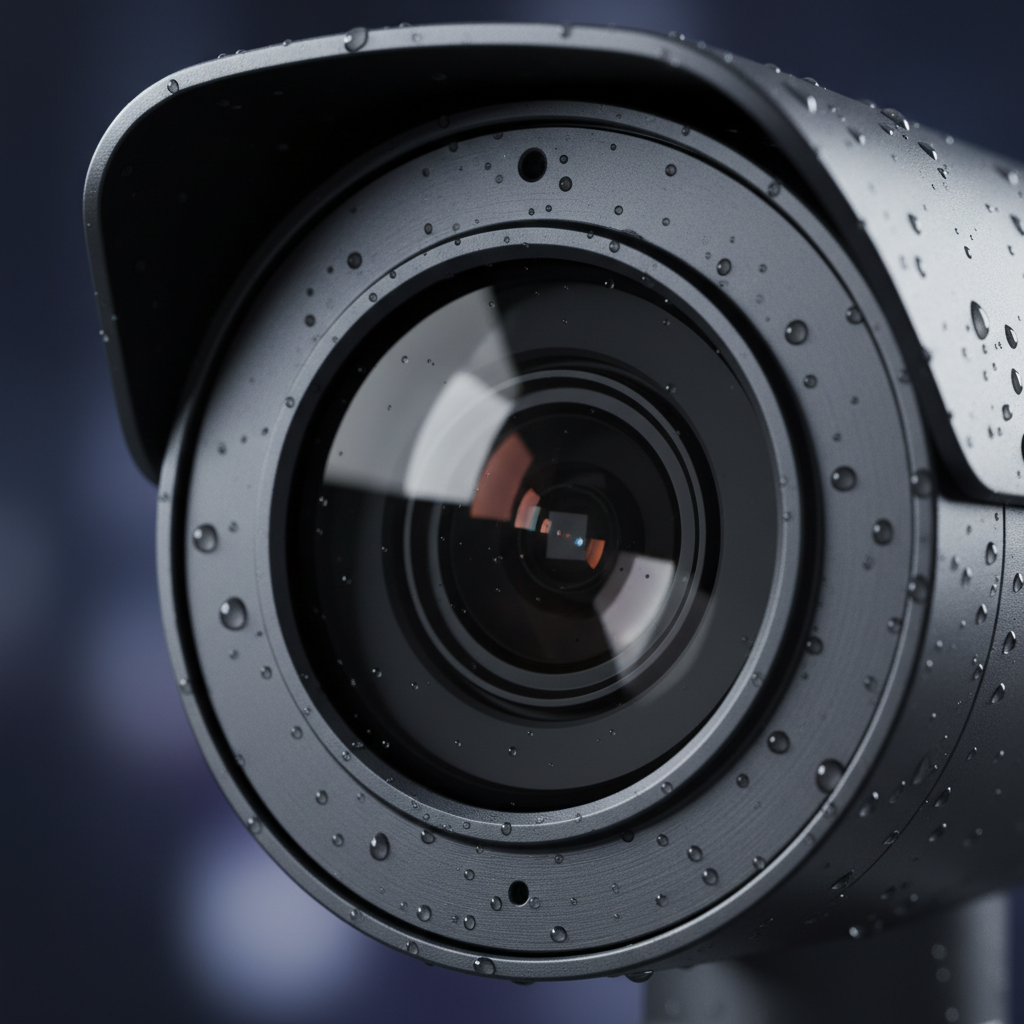
Choose color night vision by form factor and lighting method. Turrets resist glare on soffits, domes blend in indoors, and bullets reach farther outdoors. Pure low‑light sensors favor ambient light; dual‑illumination cameras add controlled white light for reliable color in darker scenes.
Common form factors
- Turret camera: Great under eaves; recessed lens reduces IR and LED reflection. Works well for 8–30 ft entries.
- Dome camera: Discreet and vandal‑resistant; ideal for lobbies and indoor corridors where aesthetics matter.
- Bullet camera: Directional and visible; excellent for parking lots and drive lanes needing 60–100+ ft reach.
Lighting strategies
- Ambient-first: Leverages porch and landscape lights; favors large sensors and f/1.0–f/1.6 lenses to hold color at 1–5 lux.
- Dual illumination: Uses IR for discreet monitoring, white‑light LEDs for color when motion is detected.
- Security lighting: Fixed, motion, or schedule-based fixtures maintain 3–10 lux across walkways for consistent color.
Color vs IR at a glance
| Feature | Color Night Vision | IR (B/W) Night Vision |
|---|---|---|
| Detail retention | Preserves clothing, vehicle, and sign colors | Loses color; relies on shape and contrast only |
| Lighting need | Needs low ambient or on‑camera white light | Works in near‑total darkness with IR LEDs |
| Deterrence | Brighter scenes are more visible to intruders | Less visible; lower deterrence |
| Privacy | White‑light may be noticeable to neighbors | Invisible 850 nm IR; more discreet |
| Typical use | Entries, porches, storefronts, loading areas | Back lots, alleys, unmanned yards |
Not sure which to choose? Our home CCTV guide shows how color night vision pairs with smart motion detection and listen‑in audio to raise capture quality without overcomplicating your setup.
Best Practices
Place cameras where light is predictable, control reflections, and tune exposure for motion. Use varifocal lenses to frame faces at 10–20 ft, maintain 15–25% headroom in bitrate, and secure outdoor terminations with junction boxes for long‑term reliability.
Placement and framing
- Mount entry cameras at 8–10 ft to balance face angle and deterrence.
- Frame doors at 12–18 ft with a 2.8–12 mm varifocal; keep faces 200–300 px tall at 4K for easier identification.
- Avoid aiming directly at bright signs; use WDR to tame contrast between 1–1000 lux zones.
Lighting control
- Target 3–10 lux across walkways; keep white‑light LEDs in “motion‑only” mode to reduce light pollution.
- Shield fixtures to prevent window glare; choose 3000–4000 K color temperature near residences for comfort.
- Use dual‑illumination if ambient light drops below 1 lux for hours overnight.
NVR and network tuning
- Use 30 FPS where motion clarity matters (doors, cash wraps); 15–20 FPS is fine for general perimeters.
- Maintain 15–25% spare throughput on the NVR; H.265 with smart codec keeps night bitrate stable.
- Enable smart motion detection (person/vehicle) to filter rain, insects, and headlight noise.
Cable and weatherproofing
- Run Cat6 in UV‑rated conduit outdoors; use outdoor junction boxes for clean wire concealment and service loops.
- Seal penetrations and use gaskets on camera bases; check IP67/IP66 ratings for exposure.
- On long runs, ePoE can extend PoE reach; verify switch and camera compatibility before deployment.
For a hands-on refresher, our article on security cameras with audio and night vision explains microphone placement, privacy considerations, and how audio complements color footage during incident review.
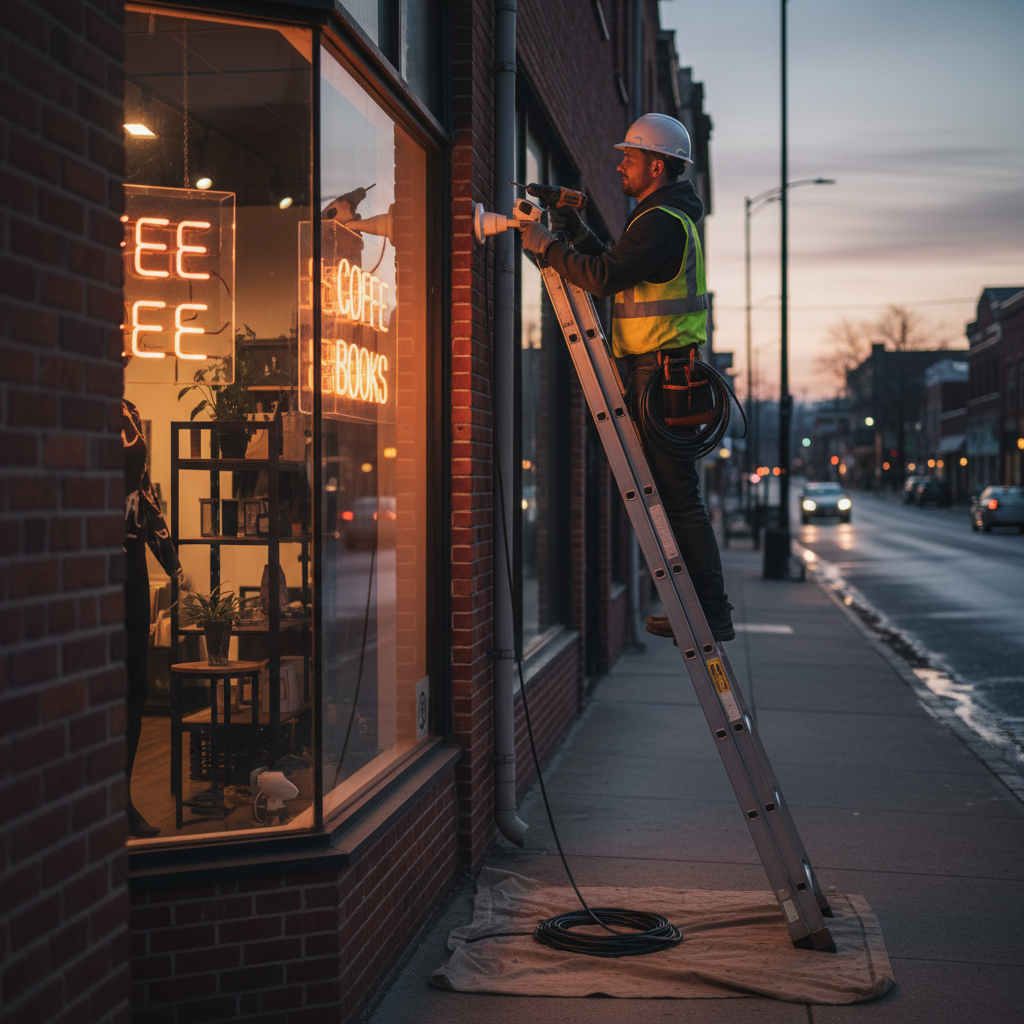
Need help planning a color night vision upgrade?
- Free estimates from certified electricians and security techs
- One brand for electrical work, cameras, NVRs, and accessories
- Fast, minimally disruptive installations
Start with a quick consult on our site: CCTV system guide.
Tools and Resources
Pair color night vision cameras with a compatible NVR, quality cabling, and smart detection. Use remote viewing apps for alerts, and add weather‑rated junction boxes for durability. Start with proven 4K kits and varifocal optics to fine‑tune framing without re‑mounting.
- 4K NVR kits: Streamlined setup, matched firmware, and balanced throughput. Explore our 4K NVR with smart IP bullet cameras for 30 FPS capture and listen‑in audio.
- Dome alternatives: Prefer discreet indoor coverage? See our 4K NVR with smart IP dome cameras.
- Installation know‑how: Review a step‑by‑step CCTV installation guide to prep tools, verify PoE, and weatherproof mounts.
- Mobile apps: Remote viewing, alerts, and clip sharing keep you connected when you’re away.
- Accessories: Outdoor junction boxes simplify service and protect terminations; use quality Cat6 for sustained night bitrates.
Want a broader shopping overview? Our internal security camera shopping guide compares form factors, lenses, and feature sets across residential and small business use cases.
Case Studies and Examples
Color night vision consistently shortens investigations. In homes, it clarifies faces at the door. In shops, it distinguishes staff from visitors. In facilities, it helps trace vehicles across lots. Below are real‑world scenarios mapped to Alpha9 Solutions’ services and gear.
Homeowner: front porch and driveway
- Challenge: Porch activity peaks after sunset; IR mode hides jacket colors and package labels.
- Solution: 4K turret at 9 ft with dual‑illumination “motion‑only,” 2.8–12 mm lens set near 4 mm for 12–15 ft framing.
- Result: At 30 FPS, visitors’ clothing colors and vehicles appear natural; smart motion reduces false alerts from passing headlights.
Small business: storefront and sidewalk
- Challenge: Bright signs and dark sidewalks cause blowout and crushed shadows on IR cameras.
- Solution: Bullet camera angled across the entry at 20 ft; WDR enabled; white‑light LEDs at low power except on motion.
- Result: Color footage separates staff uniforms from customer wear; incident clips are easier to share with neighbors.
Facility manager: dock and back lot
- Challenge: Wide area lighting varies with schedules; IR lacks color markers for trucks and pallets.
- Solution: Mixed approach—bullet for the lane (long reach), turret for the dock face (glare control); supplemental security lighting at 5–10 lux.
- Result: Vehicle color and strobe types are visible; cross‑camera tracking speeds up incident triage.
These outcomes align with our broader CCTV planning guide—start with objectives, then select sensors, lenses, and lighting to match each scene’s light profile.
Frequently Asked Questions
Most buyers ask about darkness limits, neighborhood impact, and setup steps. Color night vision works best with minimal ambient light or motion‑triggered white LEDs, requires thoughtful placement to avoid glare, and pairs well with smart motion and 4K recording for clear results.
How dark is too dark for color night vision?
Color night vision needs some light—typically 1–5 lux is enough with a large sensor and a fast lens. If ambient light drops lower for long periods, choose a dual‑illumination model that uses white‑light LEDs on motion to restore color without keeping lights on all night.
Will the white‑light LEDs bother neighbors?
Use low‑intensity or motion‑only modes and aim LEDs away from windows. Warmer color temperatures (3000–4000 K) feel less harsh in residential areas. If privacy is a concern, run in IR mode most of the time and let the camera switch to white‑light only when motion is detected.
Do I need 4K and 30 FPS?
4K increases pixel density for identification, and 30 FPS helps with fast motion at doors and drive lanes. For general perimeters, 15–20 FPS is often sufficient. Balance resolution and frame rate with your NVR’s throughput and desired storage retention.
Bullet, dome, or turret—what should I choose?
Use bullets for distance and deterrence, domes for discreet interiors and vandal resistance, and turrets for soffit mounts with minimal glare. The right pick depends on mounting height, field of view, and nearby light sources. Varifocal lenses help you fine‑tune framing after mounting.
Conclusion and Next Steps
Color night vision turns night scenes into usable, evidence‑ready video. Match sensors, lenses, and lighting to each location; tune your NVR and motion rules; and protect cabling for long‑term reliability. The payoff is faster incident review and clearer identification.
Key takeaways
- Color retains critical identifiers at night, especially at doors and lots.
- Sensor size, fast glass, and smart white‑light make color possible.
- Form factor choice matters: bullets for reach, turrets for soffits, domes for interiors.
- Plan lighting to 3–10 lux; use motion‑only LEDs when needed.
- Pair with 4K, 30 FPS (where motion demands) and smart detection to reduce noise.
Ready to upgrade? Explore our planning insights on CCTV systems, then consider a turnkey home video security setup or a tailored package from our security cameras overview. Our team of certified electricians and security specialists can help you move from plan to install with minimal disruption.


